Globalisation Died in the Strait of Hormuz
Also available on Substack
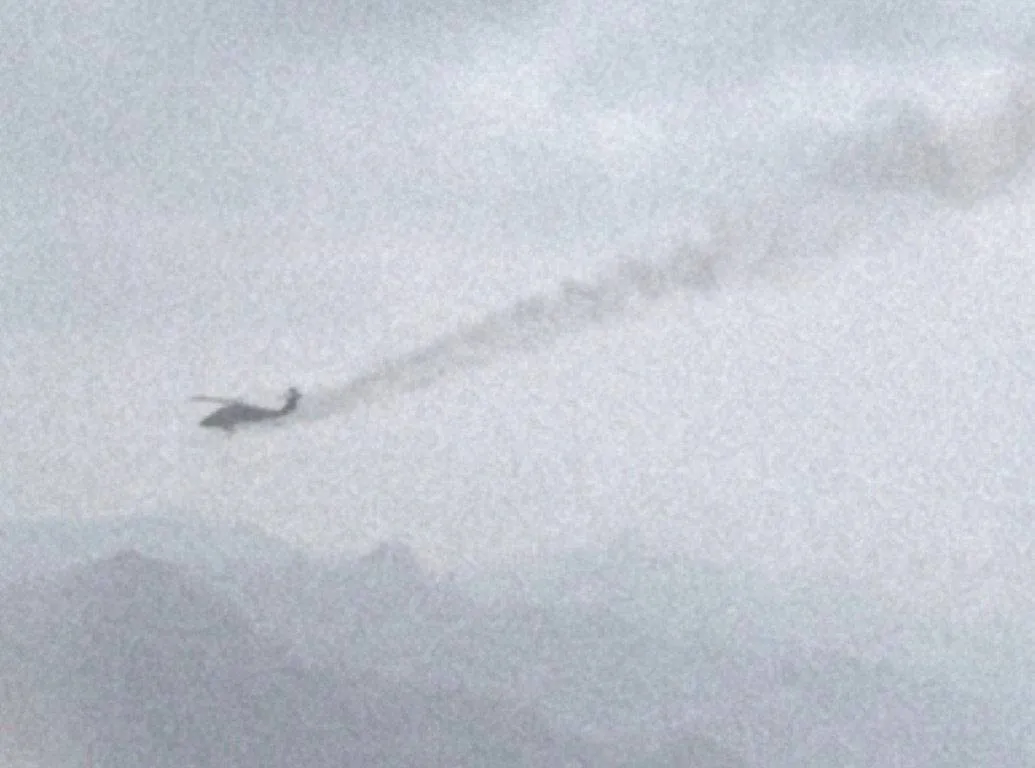
A HH-60G "Pave Hawk" combat search and rescue helicopter hit in Southern Iran
From the late Middle Ages to the Renaissance, Italian city states contracted mercenaries - known as the condottieri - to protect their wealth and treasure. Much like the prosperous cities of Dubai, Singapore and Hong Kong today, these wealthy Italian city states lacked strategic depth and military power - their wealth and prosperity hinged entirely upon trade routes they could not themselves defend.
The post-war era, much like the time in which the likes of Genoa and Venice outsourced their security, was an artificial moment where the weak prospered and the strong languished. From the Far East in Japan and Korea, to the Gulf Cooperation Council (GCC), North Africa, Europe and beyond, the Americans fulfilled the role of the condottieri.
Globalisation rewarded economic integration over strategic autonomy, allowing states to prioritise prosperity while outsourcing security. The game was clear: break down barriers, embrace the melting pot, shake off cultural idiosyncrasies. There was no god, and if there was, it was the United States Dollar.
But the election of Trump, and Brexit before that, put globalisation on life support. Some, like the Chinese, were acutely aware of this. Others, like Australia, Western Europe and the UK still seem unaware. All the Americans have to show after more than a month into the Iran War are: damaged bases, destroyed military equipment, downed aircraft and depleted air defence systems.
The fatal blow to the globalised liberal world order was lying in wait in the ~40km sea lane between Oman in the South and Persia to the North - the Strait of Hormuz.
An Unfair Game
The post-war era was one of perverse economic incentives[1]. Countries were able to trade freely, so long as they adhered to the so-called rules-based order: essentially, don't work against the Americans, do what they say, and you can prosper. Countries that resisted, or were never fully accepted into this global system, because they would not entirely abdicate their sovereign interests, were shut out. Those countries most willing to sell out, embrace the English language, Hollywood, the consumer society, and devote themselves to the so-called free market, prospered.
So perverse were the incentives, that previously formidable military powers such as Great Britain, France and others knowingly neglected their defence industries[2]. At the same time, countries rich in natural resources and with strategic depth remained poor. Ukraine, resource rich with fertile soil, gas, and rare earths, languished as the poorest country in Europe [3]. Russia, having succeeded the USSR with its massive military armaments, remained on the global economic sidelines. Africa, with its vast mineral and agricultural wealth, stayed poor. In China, the factory floor of the world, income levels were many times lower than in the so-called developed countries.
So fragile, integrated and illogical did the global economy become, that oranges grown in Spain would be sold in Asia, and resource giants like Australia became almost entirely reliant on imported fuel. Indeed, as oil prices surge to US$112 (WTI) at the time of writing, Australia has just ~30 days' worth of secured reserves[4], simply because it made "economic sense".
Mercenaries Must Be Paid
Western governments systematically neglected their nations, hollowed out their indutrial bases, doubling down on the welfare state, sure that this new paradigm was permanent. They bet that the Americans would tolerate free riders forever. In fact the ignorance of Westerners seemed to know no limits, with Josep Borrell, then Vice-President of the European Commission, stating in 2022 [5], that:
"Yes, Europe is a garden. We have built a garden. Everything works. It is the best combination of political freedom, economic prosperity and social cohesion that the humankind has been able to build... The rest of the world... is not exactly a garden. Most of the rest of the world is a jungle, and the jungle could invade the garden."
This entire system was underpinned by an agreement, namely the Petrodollar. Oil producers, by committing to only settle oil transactions in dollars, allowed the United States' to print money and export its monetary hubris. The United States could maintain and overstretch its empire because the usual financial constraints did not apply[1]. But things are no longer so simple.
Patience is bitter, but its fruit is sweet
While Western countries looked wealthier on paper, dominating international institutions and pontificating on how the world should look, those who had not participated in the wealth and prosperity of the post-war US-led "liberal" world order had hardened, sharpened their swords, and were determined to assert their independence.
China, Russia, Iran and many others, unable to achieve the living standards and prestige of their Western counterparts, were quietly but surely chipping away. China especially was the total inversion of Western Europe. The Middle Kingdom leveraged the US security umbrella, as well as its unique position since the détente with the US that was so pivotal in isolating and defeating the USSR[6], to grow its economy and in turn its defence spending.
System Breakdown
The Iran War is entering its fifth week, and US special forces are desperately trying to locate the US pilot shot down in southern Iran[7]. Those who contended that the decapitation strike on Iran's geopolitical leader would lead to a swift and emphatic victory have been made to look like fools.
At the time of writing, the US has lost four planes in a day[8] - excluding an unknown number of berthed aerial assets. The US endures persistent harassment of its bases[9] and maritime traffic is at a standstill[10]. Flying budget drones into state-of-the-art US military installations that sit exposed across the Arabian flats is proving to be an effective strategy.
Meanwhile, oil-rich states in the GCC that relied on US security guarantees have found themselves to be hyper fragile and helpless to the events unfolding before them, which in turn are crippling their expat dependent, asset inflated economies[11].
Who Dares Wins
In 2023, William Burns, former director of the CIA, stated that the US has intelligence that Xi Jinping has ordered for capability readiness to take Taiwan in 2027.
Whether or not China has the desire or the intention to invade Taiwan, the Iran War has brought into question US force capabilities in East Asia. Specifically the US' ability (and desire) to defend the island of Formosa. As American air defence assets in the Middle East have been depleted by Iran's persistent and underestimated ranged capabilities, orders for Patriot Missiles have been re-routed from the likes of Korea[12] and elsewhere (Poland has refused[13]), highlighting inventory and production constraints that betray a lack of preparedness on the part of the aggressor.
The conflict in Iran may have exposed the hegemon's limits. What we are witnessing now is the mad dash to secure resources, assets and relationships that will be integral to what is coming next.
Could Globalisation Survive?
Although messy, destructive, and seemingly incoherent, the US strategy, makes sense at some level. Unlike the countries that prospered under the security umbrella it provided, the US still has formidable technological, economic and military capabilities.
"God has a special providence for fools, drunkards, and the United States of America." - Otto von Bismarck
The Iran War represents an attempt by the United States to remain the world's sole hegemon. By denying its competitors energy security, even as its economic dominance is in relative decline, it hopes to hold the world to ransom. This is a proxy war, much like Ukraine is for Russia, but this for the US is not a trap. The US does not rely on oil from the Strait of Hormuz. For a country that has spent the last few decades engaged in asymmetric operations against poorly equipped insurgents rather than near-peer adversaries, this conflict, irrespective of the outcome, provides for the necessary impetus to modernise the US military in the new age of drone and AI capability enhanced warfare. Operation Southern Spear, which saw the capture of Nicolás Maduro[14], showed the US still has it and that was the point - but there is work to be done.
Even if the US is expelled from the Gulf region, does it really matter? No matter the outcome, it can retreat to its resource rich hemisphere, and dominate it militarily, culturally and economically. The US will attempt to maintain this system through controlling the world's energy supply. If it fails? So be it!
The hard facts suggest, that this operation will not resuscitate the globalised liberal world order. The US and Israel (which is the brain and which is the body?) represents an ever smaller portion of the global economy (USA represents approximately 15% of the global economy in PPP terms)[15]. NATO, once a formidable lineup of great powers led by the US is essentially now just the US. The reality is that Americans cannot dominate the world as they previously did, and as the U.S. Navy is challenged and overstretched. So too will be the peaceful maritime trade that it facilitated for so long.
The New International Paradigm: Security Zones
As the security apparatus that has nurtured globalisation collapses, the cost of doing trade globally has increased. The increasing friction and costs of trade in a fragmenting world mean the complex network of just-in-time inventory management no longer makes sense. What comes next is likely to be a network of Security Zones - the manifestation of multi-polarity. These zones will be dominated by their respective regional powers, but unlike the post-war US dominated era, these dominating powers will be unable to project force unimpeded across the globe.
It is impossible to outline exactly where these new zones will begin and end. Some will invariably overlap. In Eastern Europe and it will be Russia. In the Gulf it will be under a reemergent Persia that provides security and structure within the vacuum left by the United States. The United States will remain a superpower and dominate its hemisphere, while China will dominate their share of Central Asia, East Asia and Southeast Asia.
Elsewhere, economic tension is likely to persist, with constant instability and power struggle, further eroding the trading frameworks that have facilitated globalisation until now. Europe may stand to be the biggest loser, showing us that the real costs of absorption into the American empire will not be felt by the Atlanticist boomers who chose that path, but rather by the zoomers and millennials who inherited this ensuing mess.
References
[1] Gold Wars: The Battle Against Sound Money As Seen from A Swiss Perspective, 2001, Ferdinand Lips
[2] The real problem facing Britain's shrinking military, 2025
[3] IMF Data Mapper, GDP Per Capita 2026, Ukraine
[6] The United States and China During the Cold War, Warren I. Cohen
[7] US and Iran race to find crew member from downed F-15 jet
[8] US Air Force Just Suffered its Worst Day in Decades, April 2026
[9] FPV drone slams into US military base in Iraq
[10] After Strait of Hormuz opens, turmoil would still last months, analysts say, April, 2026
[12] Hasty redeployment of US missiles from South Korea to Middle East leaves Seoul rattled, March, 2026
[13] Poland’s refusal to send ‘Patriots’ to Middle East shows Europe’s air-defence anxiety, April, 2026
[14] Nicolás Maduro Moros (Captured), 2026
[15] Visual Capitalist, The Global Economy in 2026 by Purchasing Power Parity, 2026